What counts as adequate laydown space for a transformer delivery
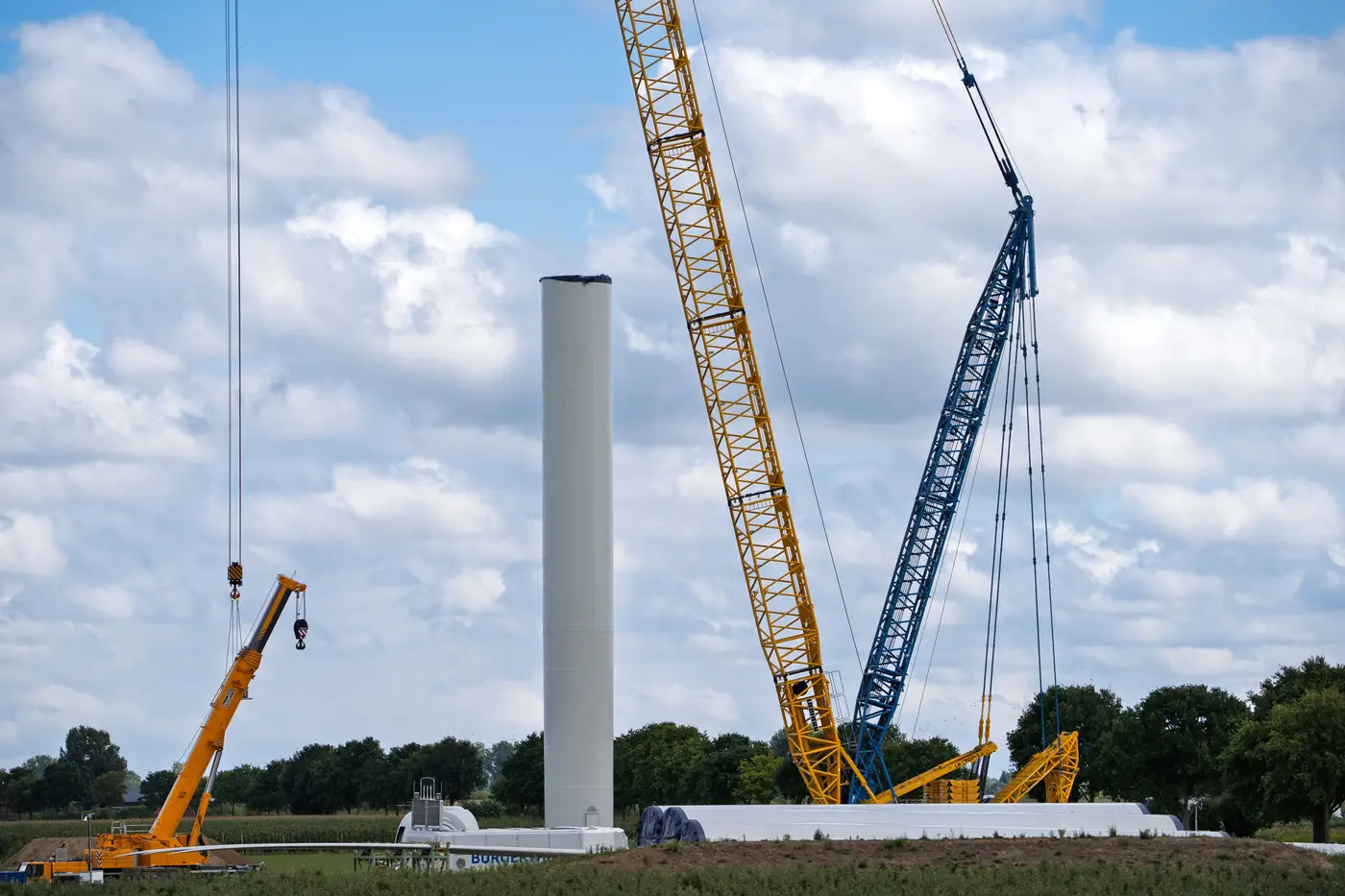
A main power transformer doesn't just need a pad to sit on. It needs room to arrive, room to get off the trailer, and room for whatever's doing the lifting to set up without clipping a fence line, a retention pond, or the substation fence it's about to live inside. "Adequate" laydown space means all three of those fit at once, on ground that can carry the load. Most blown schedules trace back to someone sizing for the transformer and forgetting the equipment around it.
What the laydown footprint includes
Start with the unit itself. A large step-up transformer for a utility-scale solar or wind interconnection can run 200 to 400+ tons depending on voltage class and MVA rating, riding on a Schnabel or hydraulic platform trailer that's often 80 to 120 feet long once you count the dollies on each end. That's the easy part to measure off a drawing.
The part that gets missed is the lift. Transformers this size usually come off the trailer with a crawler crane, and a crawler big enough for a 300-ton pick doesn't arrive light. Figure on an outrigger or crawler footprint that can eat another 100 to 150 feet in each direction once you account for counterweight trailers, mat laydown, and the crane's swing radius during the pick. If the site plan has the crane working from one side only, you need clearance on that side specifically, not just "space nearby."
Then there's staging for the rest of the gear: jacking and skidding equipment if the crane can't make the full reach, spare dollies, the tractor that pulled the load in, and a turnaround area so the empty trailer doesn't have to back out a half-mile of access road. None of this needs to be pretty. It needs to be flat, compacted, and clear of soft ground or recently graded fill that hasn't had time to settle.
Sizing it for a renewables site specifically
Solar and wind interconnection substations tend to get boxed in by the same constraints that shaped the rest of the site: a narrow access easement, a drainage swale along one edge, a collector line running overhead on the other. Laydown space sizing for these sites usually comes down to whatever flat ground is left once the substation pad, the fence line, and the access road are drawn in, which is often less than the crane crew wants.
A rough rule that holds up across most projects: plan for a cleared, graded laydown zone at least 150 by 150 feet adjacent to the transformer pad, with a clear approach lane the full width of the trailer plus swing allowance. That number moves with crane size, lift radius, and whether the unit gets set directly or jacked and skidded into final position. Treat it as a starting point for the haul plan, then confirm it against the site itself the week before mobilization.
Where this breaks down before mobilization
The gap that causes the real problems is between what's on the civil drawing and what's actually there the week the convoy arrives. Grading contractors fall behind, a stormwater basin gets dug where the laydown pad was supposed to go, or a staging area drawn six months ago turns out to back up against a stand of trees nobody cleared. A pilot car crew finds this out at the gate. A desk check finds it before the trailer leaves the yard.
That's the gap a desk-based constructability check is built to close: reading current site imagery against the haul plan so the laydown area, the approach road, and the bridge and gradient constraints along the route get confirmed before the move is committed, not during it.
If you're routing a transformer delivery into a renewables site and want that confirmed before the haul plan locks, Constructability Screening runs the route-and-site read from current imagery so laydown space, road geometry, and bridge limits get checked on request, per project.