Single-piece vs segmented blades: why haul route screening changes
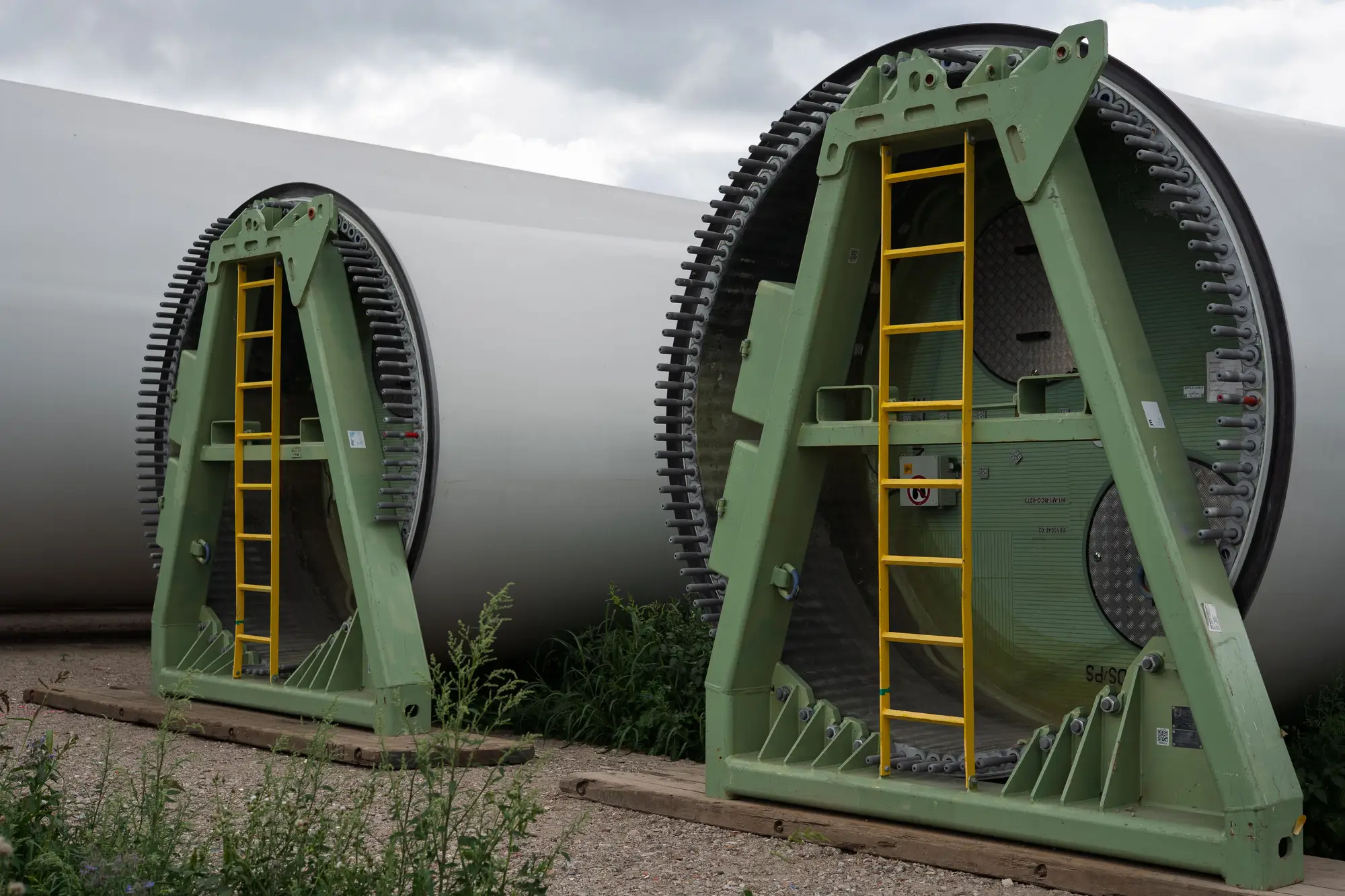
A single-piece blade and a segmented one fail a route for different reasons. If your screening checklist doesn't change depending on which blade is on the trailer, it's missing half the risk.
What's actually different about the haul
A single-piece blade on a 6+ MW platform is routinely 70 to 90 meters of rigid structure sitting on an adapter trailer with a steerable dolly at the tip end. That whole length has to track through every bend on the route as one unit. There's no joint, no flex, no way to take the load apart if a turn is tighter than the swept path allows. The trailer's steering compensates for a lot, but the math is still the math: bend radius, road width, and the overhang past the trailer's own footprint all have to line up at once, at every single bend between the yard and the pad.
Segmented blades (two or three pieces, root and tip sections that get joined at the crane pad) split that problem differently. Each piece is shorter and easier to steer through a tight bend, so segmented blade logistics usually clears the geometry checks that stop a one-piece haul cold. But segmenting doesn't remove load from the route, it moves it downstream. Now you're running two or three trips per blade instead of one, which means more total movements across the same bridges and the same weak culverts. And the pieces don't become a blade until they're joined on site, which means the laydown area needs enough flat, graded space to stage root and tip sections side by side before the joining crew gets to them, plus room for the bonding jig and the crane that lifts the assembled blade.
Single-piece blade transport length is a bend-radius and overhang problem on the road. Modular blade route planning is a trip-count and laydown-footprint problem at the site. Screening one and not the other misses where the actual risk sits.
Where each one actually breaks
For single-piece hauls, the failure point is almost always a bend you didn't measure closely enough, or a bridge where the blade's overhang clears the deck but not the approach rail. Gradient matters too. A long rigid blade on a steerable dolly handles curves fine but struggles on a grade change that puts stress on the dolly's steering angle at the same time it's turning. That combination is easy to miss on a desk review that only checks bend radius and gradient separately instead of together at the same station.
For segmented hauls, the failure point is more often the site end than the road. A laydown pad sized for a single-piece blade delivery doesn't automatically work for staging two or three sections plus a joining crew and their equipment. We've seen planning assume the segmented blade just needs "less room" because each piece is shorter, and then find out the staging sequence needs the full length laid out anyway, just in pieces, with access lanes between them for the join crew's gear.
Neither problem shows up on a standard permit application. A permit checks legal weight and width. It doesn't check whether your specific trailer configuration, loaded with your specific blade, clears your specific route at the tightest bend, or whether the pad you've scoped has room for a three-piece stage-and-join sequence without someone having to reposition a section mid-build.
That's the gap a desk-level route-and-site read closes before a haul plan gets locked in. Constructability Screening works from VHR imagery to check road width, bend radii, bridge spans, gradients and laydown space against the specific load, whichever blade configuration you're actually moving, so the pilot car isn't the first one to find out the route doesn't work.
If you're scoping a haul plan and want the route and the pad checked against the real blade geometry before anything gets committed, that's the job Constructability Screening does.