Checking overhead utility line clearance before you schedule the haul
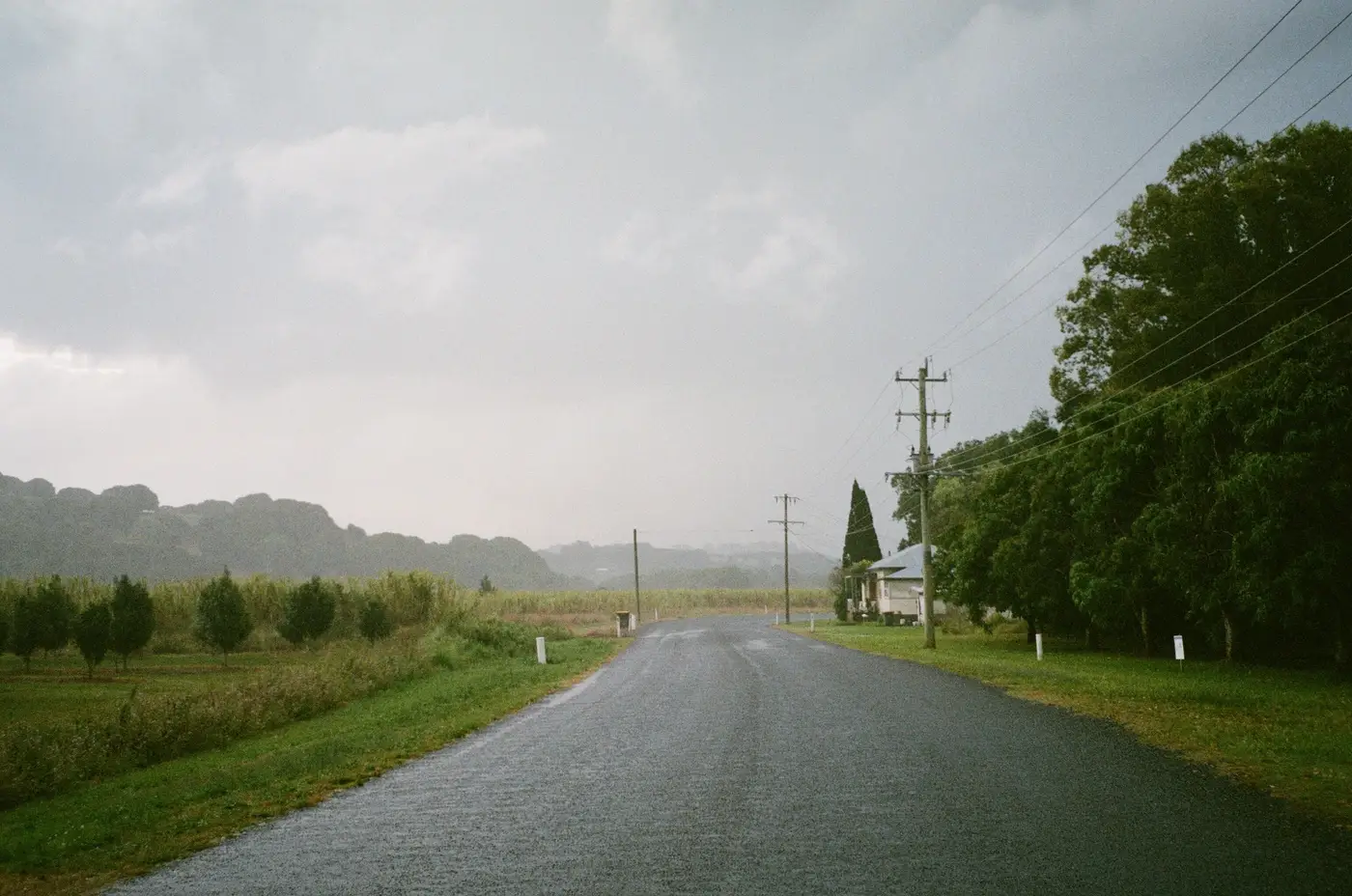
A pilot car crew finds a distribution line sagging low over a county road, the load is a nacelle at 14 feet of travel height, and the haul is already permitted for Tuesday. Now someone is on the phone with the utility trying to arrange a temporary raise, and the mobilization date moves whether the project likes it or not. This happens often enough on wind and solar routes that it deserves a proper check before the route ever goes into the permit application, not during the survey that's supposed to confirm what you already decided.
What actually needs checking at each crossing
Every point where the route passes under a line is its own small problem, and they don't all carry the same risk. A few things to pull together for each crossing:
- Line type and voltage. Distribution lines sag more and get raised more easily than transmission. Transmission crossings mean a longer lead time to coordinate with the utility, since a temporary line raise or outage on a transmission circuit usually needs engineering sign-off from the utility before any work gets scheduled.
- Clearance measured at the crossing point itself. Lines sag lowest at midspan, which usually falls between poles rather than at the road crossing itself. A clearance number taken at the nearest pole describes the pole, not the height the load will actually pass under.
- Load travel height with the trailer and ballast you're actually running. The clearance problem is a relationship between two numbers. A route doesn't fail or pass on its own; it fails or passes against a specific configuration.
- Seasonal sag. Conductor sag changes with ambient temperature and loading on the line. A crossing that reads fine on a cool morning can read differently on a hot afternoon, which matters if the haul window spans more than one day.
- Who owns the line. Co-op, municipal utility, and investor-owned transmission operator all have different lead times for a temporary raise or a line drop. Finding out which one owns a given span early changes how much runway you need to build into the schedule.
None of this is exotic information. It's the same list a lineman or a permitting coordinator would run through. The hard part is finding every crossing on a 40-mile route before a haul plan gets committed to it.
Where a desk check beats a windshield survey
The standard way most teams catch these crossings is still a physical route survey: someone drives the alignment with a pole and takes photos. That works, but it works late. By the time a survey crew is in a truck, the route has usually already been chosen, the permit is in process, and a crossing that would have ruled the route out on sight is instead discovered a week before mobilization, with the schedule already committed.
A desk-level pass using high-resolution imagery before the survey gets booked catches most of what a windshield check would catch: lines running along or across the corridor, the general spacing of poles and spans, and where a crossing sits relative to road width and bend radius constraints that already affect the route. It won't measure sag in inches, and it doesn't replace the survey. What it does is flag which crossings are worth a surveyor's time and which stretches of the route have other problems that would sink the haul before a utility coordination call is even needed. A route-and-site constructability read from imagery, run before a haul plan gets locked in, is exactly this kind of check: at Constructability Screening, it covers road width, bend radii, bridge spans, gradients, and laydown space in one pass, so the crossings and pinch points that matter get flagged before a pilot car gets sent down a road that a desk check would have ruled out.
Building the crossing list before the permit goes in
The practical order that avoids the Tuesday-morning phone call: screen the route for road geometry and overhead obstructions first, build a crossing list from that screen, then send the surveyor to confirm clearance numbers only at the crossings that actually need it. Utility coordination for a line raise or temporary outage takes weeks in most jurisdictions, so the crossing list needs to exist well before the haul date gets set, not after.
If your team is routing abnormal loads to a renewables site and wants that screen done before the haul plan gets committed, that's the gap Constructability Screening is built to close.