Crane pad vs laydown yard: what's the difference
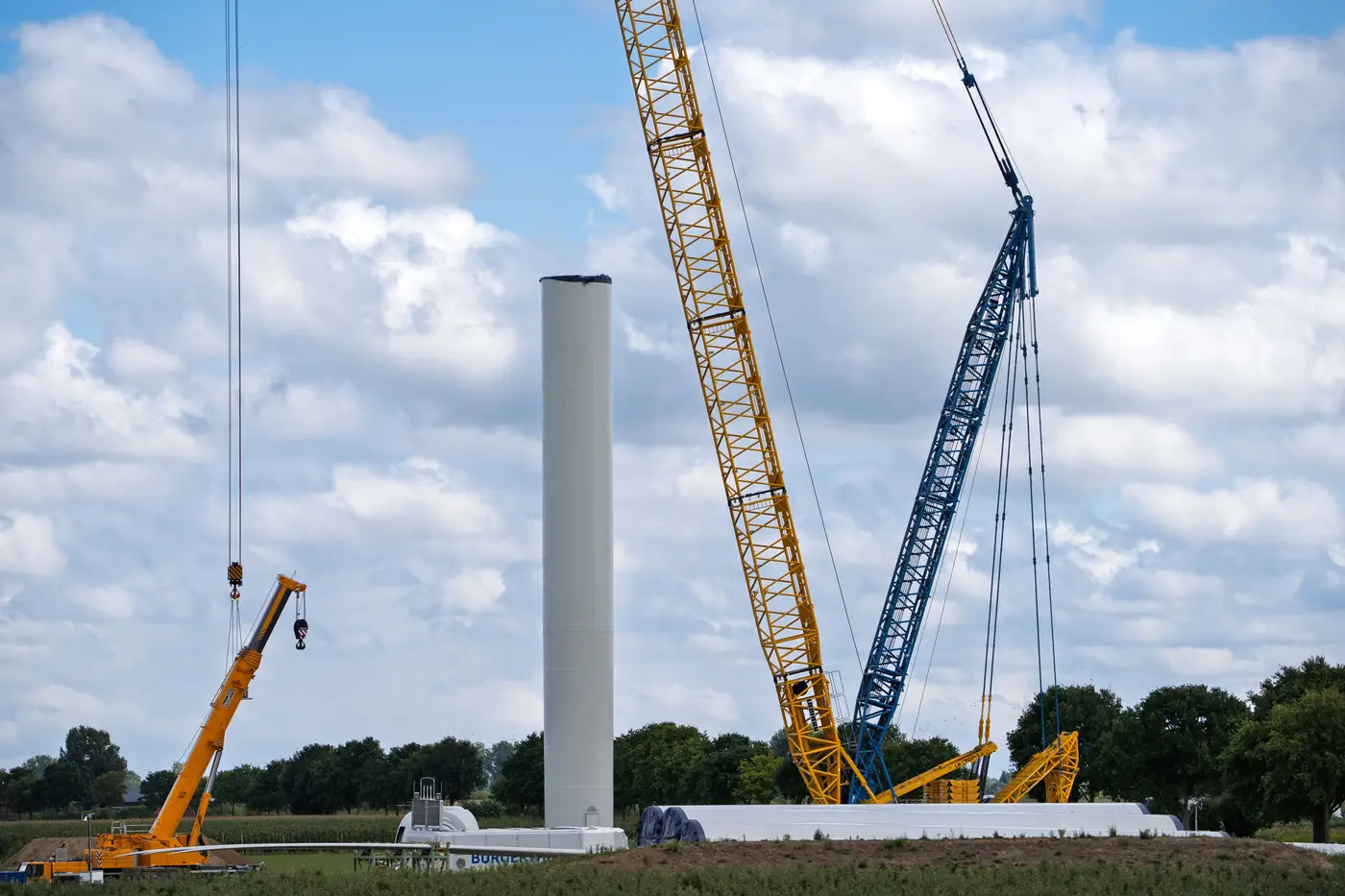
If you've spent any time on a haul plan for a wind or solar project, you've heard both terms thrown around in the same breath, sometimes by the same person in the same sentence. Crane pad and laydown yard aren't interchangeable, though, and mixing them up in a site prep scope is how a mobilisation date slips by three weeks.
A crane pad is where the crane sits and works. A laydown yard is where everything the crane needs to pick up gets staged before it's picked up. One holds a machine. The other holds inventory.
What a crane pad actually has to do
The crane pad carries the outrigger loads of whatever crane is specified for the lift, usually a crawler crane in the 600 to 1,200 tonne class for a modern turbine hub, sometimes bigger depending on the OEM's lift plan. The pad has to be level, compacted to a bearing capacity the geotech sign-off actually specifies, and sized to the crane's footprint plus the working clearance the outriggers need, a dimension spec sheets routinely skip.
Crane pad size isn't a fixed number you can pull from a table and apply to every site. It depends on the crane model, the boom configuration, counterweight placement, and whether the lift uses a main-and-tail setup or a single-unit pick. A pad that works for a Liebherr LR 1750 won't necessarily work for a Manitowoc on the same turbine, because the outrigger spread and ground pressure points land differently. Whoever is doing the pad design needs the actual crane data sheet, not a rule of thumb.
The other thing a crane pad needs that often gets missed on a desk review: swing clearance. A crawler slewing a blade or nacelle needs room to rotate without the tail swing hitting a slope, a fence line, or an access road embankment. That's a geometry problem, and it's exactly the kind of thing that shows up on a route-and-site constructability read before anyone pours a cubic yard of aggregate.
What a laydown yard is actually for
The laydown yard is the staging ground. It's where blade sections, tower cans, nacelle components, and transformer skids sit after they roll off the trailer and before the crane is ready for them. Laydown yard requirements come down to three things: enough flat area to lay out components without stacking them on top of each other, turning room for the delivery trucks that are still bringing in abnormal loads while earlier loads are being staged, and a surface that won't rut under repeated heavy traffic in wet weather.
Blade staging is usually the long pole here. A single blade segment for a modern turbine can run past 60 meters, and a yard that's sized for tower sections won't necessarily have the straight-line length to lay blades out the way the rigging crew needs them. This is where a lot of haul plans get caught out late: the access road check clears the route fine, but nobody confirmed the laydown area at the site itself has the depth for blade staging until a pilot car survey is already rolling.
Why the difference matters for routing
For an EPC logistics planner, the crane pad and the laydown yard are two separate constructability questions, and they fail independently. A site can have a perfectly adequate crane pad and still choke on laydown space if the available flat ground near the turbine location is narrower than the blade length requires. Or the laydown area can be generous while the crane pad location sits on a grade that needs cut-and-fill work nobody scoped.
A route can also check out on paper, road width and bridge spans and bend radii all clearing, and still arrive at a site where the pad and yard geometry weren't confirmed before the haul plan got locked. That's the gap a site constructability check is built to close: reading the route and the site together from high-resolution imagery, gradients, laydown footprint, and crane pad siting included, before a pilot car gets sent down a road the desk work would have flagged.
If you're scoping a renewables site and want the pad and yard geometry checked against the actual haul plan before mobilisation, that's the kind of read Constructability Screening runs per project.